


Crisoar Ultrasonic Retainer & Denture Cleaner
Crisoar Ultrasonic Retainer & Denture Cleaner
- Deep Clean in 3 Minutes
- Reaches Grooves Brushing Misses
- No Scrubbing, No Scratches
- Retainers, Aligners & Dentures
BUNDLE & SAVE
Couldn't load pickup availability

Crisoar Ultrasonic Retainer & Denture Cleaner
Get it between - and -.
You put it in your mouth every single day. When was the last time it was truly clean?
Brushing scratches. Rinsing misses. Cloudy film, odor, and buildup come back fast. The Crisoar cleaner uses high-frequency ultrasonic vibration to lift grime from every groove your toothbrush can't reach, in as little as 3 minutes, with nothing but water.
Why it matters
- In a UCL Eastman Dental Institute study, 2 in 3 retainers carried Candida yeast and 1 in 2 carried Staphylococcus.
- A 130-patient study found 64.6% of dentures were colonized by respiratory germs.
- In a 3-month clinical study, ultrasonic cleaning beat brushing for denture cleanliness and patient satisfaction.
What you get
- 3 / 5 / 10-minute modes: quick daily refresh or a deep weekly clean
- Built-in UV light: an extra finishing step after every cycle
- One-button simple: add water, drop it in, press
- Gentle on appliances: no scrubbing, no scratches
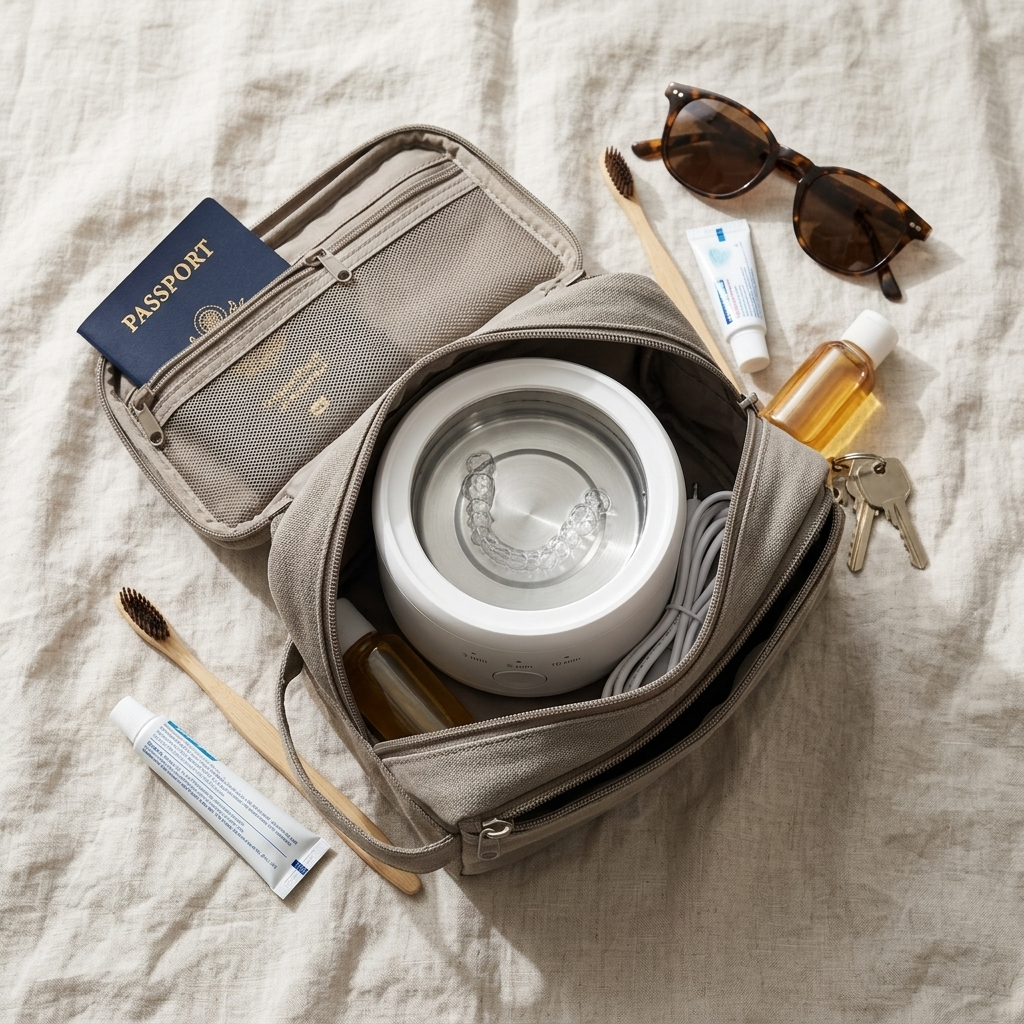
- Rechargeable & portable: fits on a nightstand or in a travel bag
Works with retainers, clear aligners, dentures, night guards, and mouth guards.
This is a cleaning device, not a medical treatment. Follow your dentist's or orthodontist's care instructions.
What buyers of this cleaner are saying
Swipe to see more →
"The dentist advised me to clean the retainer more thoroughly, so I bought it. Every time after cleaning, there were slippery residues floating in the water, and my retainer no longer had an unpleasant smell. It's not completely silent, but it's definitely worth getting."
J***r · Retainer · Aug 2026
"Works great for my mouth guard. Brushing alone can't get rid of all the hidden grime. After running the deep clean cycle, my guard feels fresh and doesn't smell bad anymore. It runs quietly so I can use it at night."
Mouth guard · Sep 2026
"I was worried it might be bulky, but it fits perfectly on my small bathroom counter. I use quick mode daily for my aligners, and deep clean once weekly for a thorough refresh. The UV light is a nice bonus to kill germs. It's really well made."
Clear aligners · Sep 2026
"If you are an orthodontic patient with clear aligners, this dental device is essential. Manual brushing only cleans the surface of your aligners, but ultrasonic waves penetrate small crevices. This saves me a lot of time every day."
Clear aligners · Sep 2026
"I bought this for my teen who wears retainers and clear aligners. He always forgot to clean his trays, which caused buildup. Now he just puts the aligner in the pod, picks the mode and waits. He finds it super easy to use."
Parent · Sep 2026
"It arrived well packed, no scratches or damage. The three modes are clearly marked. I tried deep clean first and wow, so much grime came out from my old nightguard. Runs smoothly without loud buzzing noise."
Night guard · Sep 2026
"I was initially skeptical, but it does an excellent job. The three modes are easy to use. The UV light works well. The device operates quietly during use."
Daily user · Sep 2026
"Small footprint, ideal for a small bathroom. Easy to pour out leftover water after cleaning. The machine feels sturdy. Works well for my retainer and mouth guard."
Retainer + mouth guard · Sep 2026
"The quality is better than I expected at this price. The ultrasonic vibration works well. I do daily quick cleaning and weekly deep cleaning."
Daily user · Sep 2026
"I originally purchased this to take care of my clear aligners. Out of curiosity, I put my tarnished silver necklace in for a test, and I was really shocked by the result. The dark marks I couldn't wipe off with a silver cloth were removed after one full cycle. The UV function is a nice bonus."
Aligners + bonus use: jewelry · Sep 2026
"I wear silver earrings every day and they tend to turn dark quickly. After cleaning, my silver pieces stay bright and shiny. The water tank is easy to rinse and drain after every use."
Bonus use: jewelry · Sep 2026


A Rinse Isn't Enough
What researchers found living on everyday dental appliances:
67%
of retainers in a UCL Eastman Dental Institute study carried Candida yeast.
50%
of retainers in the same study carried Staphylococcus bacteria.
65%
of dentures in a 130-patient study were colonized by respiratory germs.
Sources: Letters in Applied Microbiology (2011); Journal of Prosthodontics (2016).
How Does Ultrasonic Cleaning Work?
-
Micro-Bubbles
High-frequency sound waves create millions of tiny bubbles in the water that form and burst against every surface.
-
Deep Reach
Those bubbles get into the grooves, edges and corners where toothbrush bristles simply can't fit.
-
Zero Scrubbing
The water does the work, so there's no abrasion. That helps clear appliances stay clear for longer.

Feel the difference the moment it goes back in.
No cloudy film. No stale smell. No second-guessing. Just a retainer, aligner or denture that looks clear and feels fresh, in about the time it takes to make your coffee.
| CRISOAR | Brushing | |
|---|---|---|
🦷 Reaches Every Groove |
||
💧 Just Add Water |
||
✨ No Scratching |
CRISOAR
CRISOAR
CRISOAR
CRISOAR
CRISOAR
CRISOAR
CRISOAR
CRISOAR
CRISOAR
CRISOAR
CRISOAR
CRISOAR
CRISOAR
CRISOAR
CRISOAR
CRISOAR
CRISOAR
CRISOAR
CRISOAR
CRISOAR
CRISOAR
CRISOAR
CRISOAR
CRISOAR
CRISOAR
CRISOAR
CRISOAR
CRISOAR
CRISOAR
CRISOAR
CRISOAR
CRISOAR
CRISOAR
CRISOAR
CRISOAR
CRISOAR
Frequently asked questions
Will it damage my retainer or aligners?
Will it damage my retainer or aligners?
No. It cleans with vibration in water, with no brushing or scratching. Always follow your appliance's care instructions.
Do I need special tablets?
Do I need special tablets?
No. Plain water works. You can add a cleaning tablet for extra freshness if you like.
How often should I use it?
How often should I use it?
Daily is ideal: a quick 3-minute cycle each morning, plus a 10-minute deep clean once a week.
What can I clean with it?
What can I clean with it?
Retainers, clear aligners, dentures, night guards and mouth guards.